
From Lab to Launchpad: TT4D Joins DIU’s Dual‑Use University Accelerator Kickoff 2025
Bridging Research and Real‑World Impact

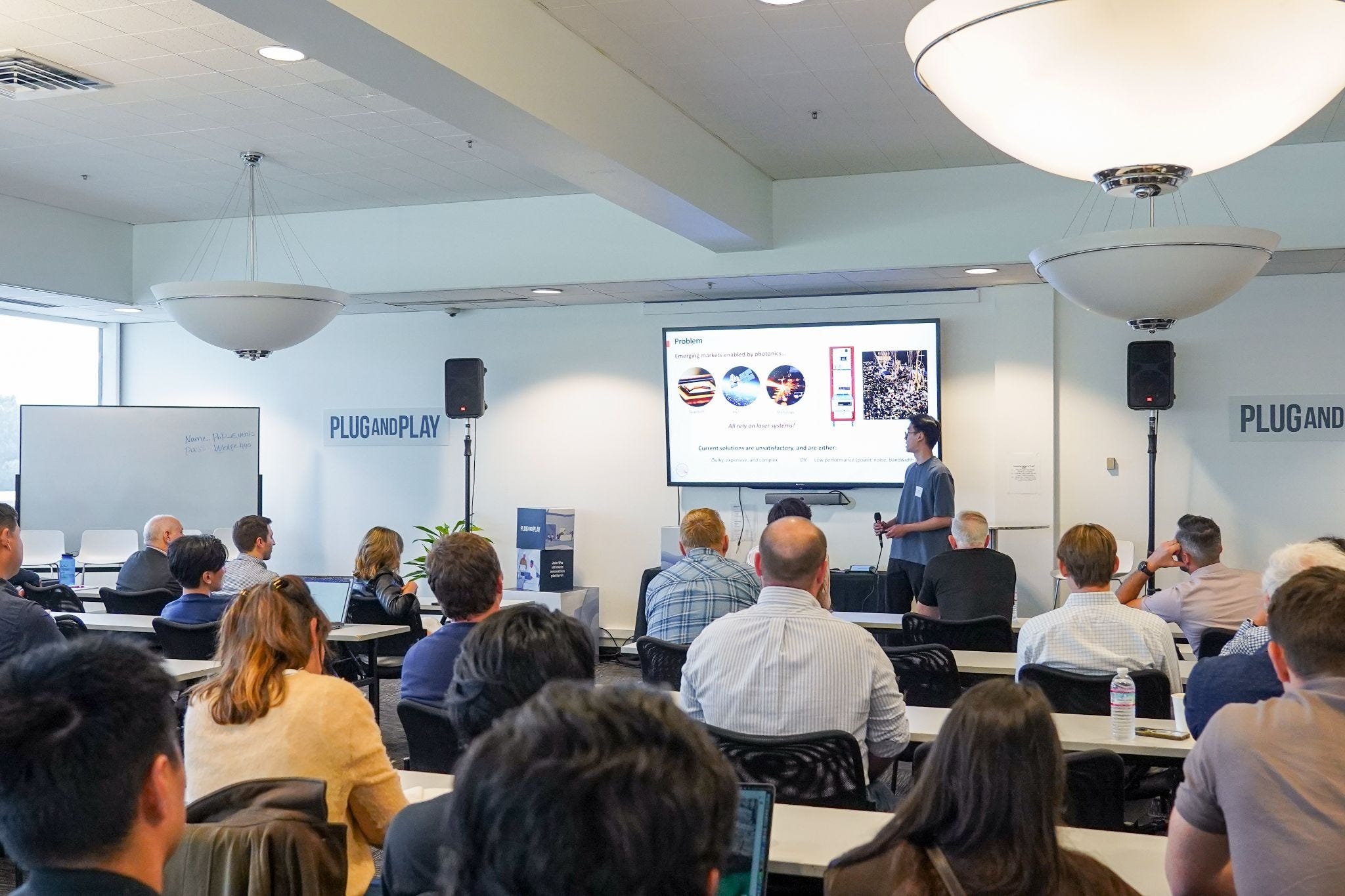
We recently had the honor of participating in the Defense Innovation Unit (DIU) Dual‑Use University Accelerator, hosted by Plug and Play and the DIU at Plug and Play HQ in Sunnyvale, California. The event was designed to bridge the gap between university research and the marketplace — an initiative to advance dual‑use technologies that drive both commercial growth and national security innovation.
Jeff Decker, managing director of Technology Transfer for Defense (TT4D) at Stanford University, and program director and co‑instructor of Stanford’s Hacking for Defense (H4D) program, served as a panelist joining experts from academia, investing, and corporate leadership. The discussion emphasized a key Department of War (DoW) need: a more effective pathway to identify, support, and accelerate early‑stage dual‑use technologies emerging from U.S. colleges and universities.

Startups founded by students, faculty, staff, and recent graduates often face hurdles maturing technologies and navigating government adoption pathways. DIU recently launched a University Defense Accelerator Prize Challenge to help campus technologies to overcome these hurdles. The Defense Accelerator Prize Challenge is designed to identify promising innovative ventures from academic ecosystems, align them with DIU portfolio priorities, and offer funding, mentorship, and strategic access to DoW and private‑sector resources. These supports advance technological maturity and enable viable go‑to‑government and go‑to‑market strategies for high‑impact national security solutions.
TT4D’s role in this landscape is to make the journey from lab to defense capability repeatable and scalable. The program specializes in matching Pentagon funding with academic research projects and transitioning emerging academic technologies from the lab to defense and commercial markets. In the past seven years, TT4D has partnered with Stanford faculty to secure more than $13 million in awards and support research and the transition of academic technologies into defense capabilities. In addition, TT4D has also supported faculty at more than a dozen colleges and universities through two Office and Naval Research programs.
The DIU-Plug and Play kickoff itself was execution‑focused. It aligned research milestones with commercialization gates, discussed early pilot programs entrepreneurs could use to gain end‑user feedback, and outlined the transition scaffolding necessary to incorporate to reduce the friction associated from transitioning from technology prototype to fielded capability. For academic researchers advancing AI/ML, autonomy, advanced materials, cyber, bio, energy, and other frontier domains, the message was clear: there is now a more coherent pathway from lab to launchpad. The event also invited the broader community to be part of the conversation on accelerating the future of dual‑use innovation.
TT4D thanks DIU and Plug and Play for convening this community and for establishing the infastructure necessary to transition academic breakthroughs into real‑world impact.
Technology Transfer for Defense (TT4D) at Stanford University specializes in matching Defense Department funding with academic research projects. In the past six years, TT4D has worked with numerous faculty members at more than a dozen universities to help them win Defense Department grants and with the Office of Naval Research, totaling more than $13 million, to support research funding and transition academic technologies from lab to defense capabilities. TT4D is based at Stanford University and is run byJeffrey Decker, PhD, program director, Precourt Institute for Energy,Fu-Kuo Chang, Professor of Aeronautics and Astronautics, andNilay Papila,PhD, senior program manager, Precourt Institute for Energy. To contact the TT4D team, visit techtransferfordefense.stanford.edu.